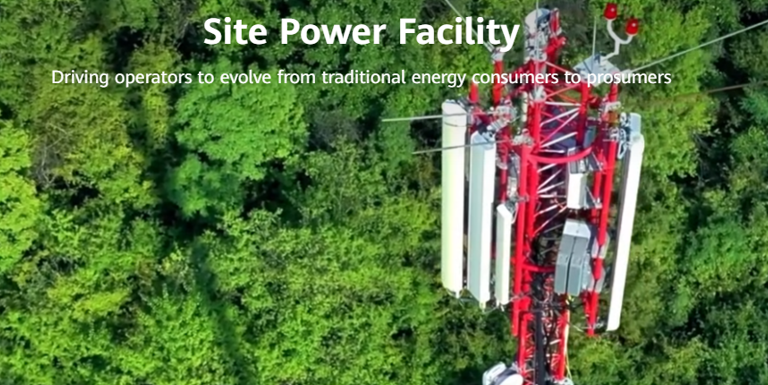
To understand why Huawei’s 5G site power solutions stand out in a crowded telecom infrastructure landscape, we first need to unpack the unique energy demands that 5G introduces. Unlike 4G networks, which focused on mid-band data and basic voice services, 5G relies on transformative technologies like massive multiple-input multiple-output (MIMO), beamforming, and dense small cell deployments to deliver ultra-high speeds, sub-10ms latency, and support for millions of IoT devices. These innovations come at a steep energy cost: a typical macro 5G site consumes 2.2 to 2.8 times more power than an equivalent 4G site, with high-capacity urban sites reaching over 5kW of continuous draw. The 64-channel Massive MIMO antennas alone account for 40% of this extra power, as each channel requires dedicated amplification and signal processing. Outdoor sites, especially in extreme climates, add another layer of complexity—temperature swings, dust, and high humidity can degrade power hardware if not engineered for durability. Take Nigeria’s MTN Group, which rolled out 1,200 Huawei-powered 5G sites across the country in 2022. In the northern regions, where daytime temperatures regularly hit 45°C, standard power units struggled with overheating, leading to 8% of site downtime. Huawei responded by adapting its power modules with advanced heat-sink technology and temperature-controlled ventilation, cutting downtime to less than 1% within six months of deployment. This example highlights the need for purpose-built power systems, not off-the-shelf solutions, for 5G sites.
Key Power Requirements for Huawei 5G Sites
Beyond just higher wattage, 5G sites have distinct power needs that differ from previous generations. First, scalability: operators need to add power capacity as traffic grows, especially in dense urban areas where small cells are deployed to boost coverage. Second, resilience: 5G use cases like emergency services, industrial automation, and connected cars cannot afford power outages, so systems must have redundant inputs and backup power. Third, efficiency: with global telecom operators under pressure to reduce carbon footprints, power systems must minimize energy waste from conversion and idle mode. Huawei’s power solutions are designed to address all three needs, with a focus on modularity and adaptability. For instance, in India’s Airtel 5G rollout, which targets 1 million sites by 2025, the operator is using Huawei’s flexible power platforms that can adjust from 1kW micro cells in rural villages to 5kW macro sites in city centers. This flexibility cuts deployment time by 35% compared to traditional fixed-power racks, as teams no longer need to order custom hardware for each site type. Another critical requirement is remote monitoring, since 5G networks span thousands of sites across vast regions. Huawei’s power systems come with a cloud-based management tool that lets operators track voltage, temperature, and battery health in real time, reducing on-site maintenance trips by 40% and enabling predictive repairs before failures occur.
Huawei’s Modular Power Systems for 5G Sites
Huawei’s core innovation in site power for 5G is its Distributed Power Unit (DPU) ecosystem, a line of compact, weather-proof units that integrate rectification, power distribution, battery management, and monitoring into a single package. The DPU is available in multiple configurations, from 1kW for small micro cells to 10kW for high-capacity macro sites, making it suitable for every type of 5G deployment. For example, Deutsche Telekom, Germany’s largest telecom operator, needed to deploy 5G micro cells in Berlin’s crowded city center, where space for infrastructure is extremely limited. Traditional power racks take up 1.2 square meters per site, but Huawei’s DPU fits into a 0.3 square meter footprint, allowing the operator to install 300+ micro sites in just three months— a 40% faster timeline compared to competitors. The modular design also lets operators scale power capacity incrementally: if a site’s traffic grows over time, they can add extra rectification modules without replacing the entire system, reducing capital expenditure by up to 20% over the site’s lifecycle. This is a key advantage for operators in emerging markets, where 5G demand often ramps up gradually rather than overnight. Huawei also offers a Blade UPS system for larger macro sites, which provides backup power for up to 8 hours without needing external generators. In Australia’s Optus network, Blade UPS units have reduced the need for on-site diesel refueling by 55%, lowering operational costs and carbon emissions.


Energy Efficiency & Sustainability in Huawei 5G Site Power
As telecom operators face stricter ESG (Environmental, Social, Governance) targets, energy efficiency has become a top priority for 5G site power. Huawei has integrated several technologies to cut energy waste in its solutions, starting with high-efficiency rectification modules that convert AC grid power to DC power with 96% efficiency—well above the industry average of 90%. Another standout feature is the Intelligent Power Management (IPM) algorithm, which dynamically adjusts power output based on real-time traffic and environmental conditions. For example, during off-peak hours (like 2 AM to 6 AM), when 5G traffic drops by 60%, the IPM system reduces power to underused sectors of the site, cutting energy consumption without affecting service quality. Optus used this algorithm across 2,500 Huawei 5G sites in 2021, reducing overall site energy use by 27% while maintaining 99.99% service availability. For operators with access to renewable energy, Huawei offers Hybrid Renewable Energy Systems (HRES) that pair solar panels, wind turbines, and lithium-iron phosphate (LFP) batteries with grid power. In Kenya’s rural Kakamega County, where grid coverage is less than 30%, Safaricom partnered with Huawei to deploy 5G sites powered by 1.5kW solar arrays and LFP batteries. These sites eliminated reliance on polluting diesel generators, cutting operational power costs by 75% in their first year and reducing carbon emissions by 12,000 tons annually. This solution has since been rolled out to 200+ sites across East Africa, bringing 5G connectivity to underserved rural areas while supporting local sustainability goals.
End-to-End Power Reliability & Site Resilience
Power reliability is non-negotiable for 5G networks, especially for mission-critical use cases like emergency response, smart grids, and autonomous vehicles. Huawei’s 5G site power systems are engineered with multiple layers of redundancy to ensure uninterrupted service. The Dual Power Input (DPI) feature allows sites to connect to two separate grid feeds, or a grid and a backup generator, so if one input fails, the other takes over within milliseconds—too fast for users to notice. For sites in extreme weather zones, like Japan’s Okinawa Prefecture, which faces annual typhoons, NTT DoCoMo deployed 500 Huawei 5G sites with reinforced power cabinets and 72-hour battery backup systems in 2020. During Typhoon Hinnamnor in 2022, which caused widespread power outages across the region, all 500 sites remained fully operational, unlike competitor networks that saw an average of 12 hours of downtime per site. Another key resilience feature is network slice-specific power allocation, which lets operators assign dedicated power capacity to high-priority slices—such as public safety or industrial IoT—ensuring they never lose power even if other slices experience spikes in demand. During India’s 2021 COVID-19 peak, Airtel used this feature to keep 200+ medical emergency communication sites running nonstop, with zero power-related outages when other residential sites faced minor fluctuations. This level of reliability has made Huawei a trusted partner for operators in regions where network uptime is a matter of public safety or economic survival.
Looking ahead, Huawei continues to innovate in 5G site power, focusing on even higher efficiency, deeper integration with renewable energy, and AI-powered predictive maintenance. As 5G networks expand to 1 billion+ sites globally by 2025, the demand for reliable, sustainable power solutions will only grow. Huawei’s approach—combining modular design, intelligent management, and resilience engineering—positions it to meet this demand, helping operators roll out 5G faster, cheaper, and more sustainably than ever before. The real-world案例 (cases) from Nigeria, Germany, Kenya, and Japan demonstrate that Huawei’s site power solutions are not just technically advanced, but tailored to the unique needs of each market, from dense cities to remote rural areas. This local adaptability is what sets Huawei apart in a global industry, ensuring that 5G connectivity is accessible and reliable for everyone, regardless of where they live.